The Series
A Note on the Series
The Living Word is a three-book series organized around a single question that every serious reader of the New Testament eventually faces: how did the message become the institution? How did the Way become Christianity? And what does it mean for the faith lives of actual people today that it did?
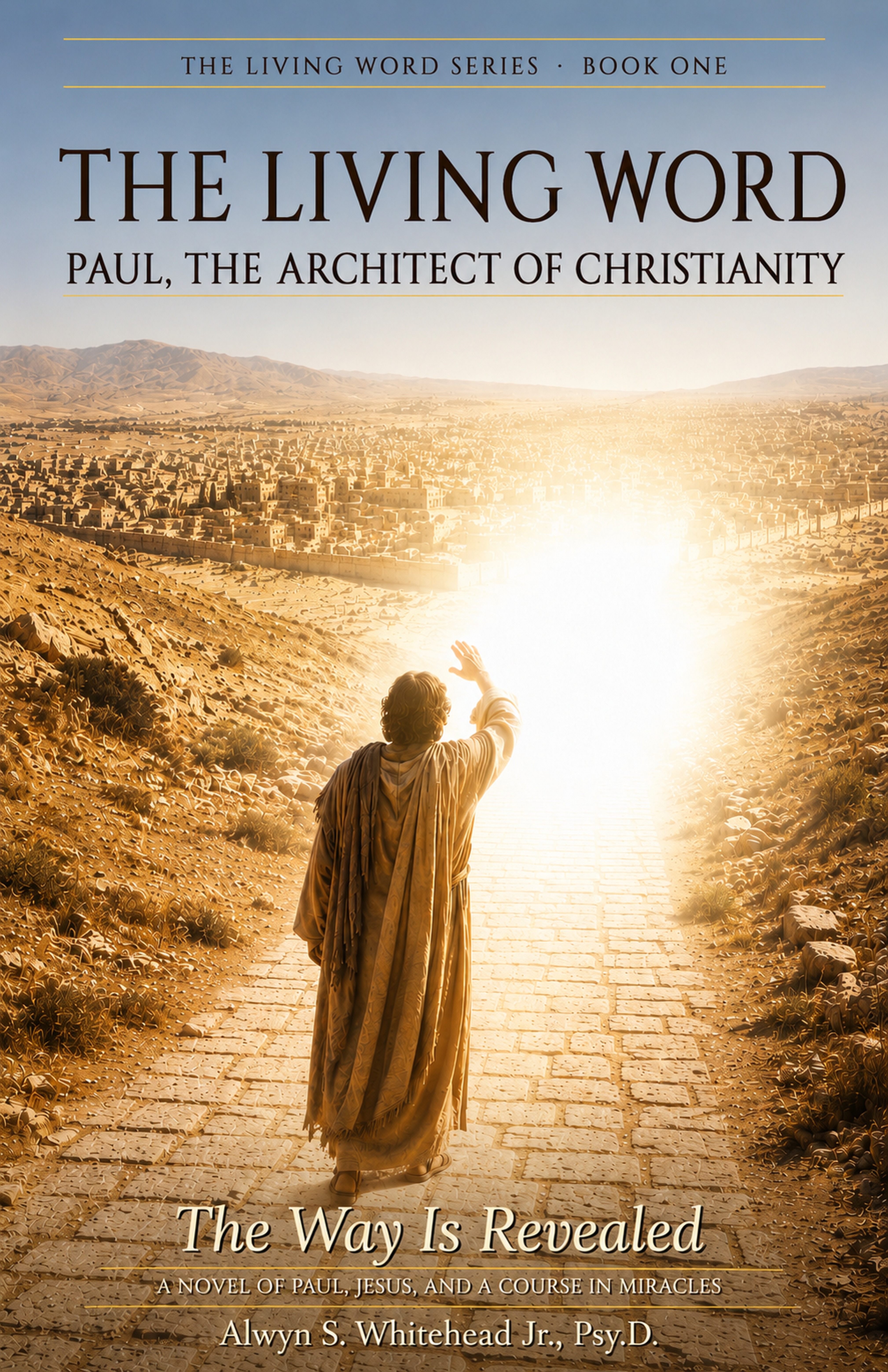
Paul, the Architect of Christianity enters that question through the life of the man who did more than any other to shape what the Jesus movement became: a man of extraordinary intelligence and genuine devotion who built something that neither he nor Jesus fully intended, and who spent his life wrestling with the gap between what he taught and what he could not yet receive.
Jesus, Then and Now: From Paul to A Course in Miracles follows the theological thread from Paul’s framework across twenty centuries to its twentieth-century resolution. It asks what Paul got right, what he left unresolved, and how A Course in Miracles addresses precisely the fault lines his framework opened.
Jesus Speaks Again, the concluding volume, presents A Course in Miracles not as a replacement for Christianity but as a correction issued by the same voice that began the conversation in Galilee, twenty centuries later, when the distortions had accumulated to a point that required a direct response.
The series is written for the person who believes in grace and cannot quite receive it. For the person who knows, somewhere, that God is love, and keeps encountering a version of God that does not feel entirely loving. The Way is not lost. It has simply been waiting, with characteristic patience, for anyone willing to look at it again.
Book One: Paul, the Architect of Christianity
Book Two: Jesus, Then and Now: From Paul to A Course in Miracles
Book Three: Jesus Speaks Again